
Visiting the dentist shouldn’t feel stressful – especially when you know exactly what to expect.
Whether you’re scheduling your very first visit or it’s been a few years since your last appointment, understanding what happens during a Dental Exam And X-Rays Freeport TX appointment can help you feel more comfortable and confident.
At Freeport Family Dentistry, we believe that informed patients make healthier decisions. That’s why every dental exam is designed to be educational, comfortable, and focused on preventing problems before they become painful or expensive.
Modern dentistry has come a long way. Thanks to Digital Dental X-Rays Freeport, your dentist can detect cavities, gum disease, infections, and other concerns long before they’re visible to the naked eye.
In this guide, we’ll walk you through every step of a dental exam, explain why digital X-rays are important, and show how routine preventive care can protect your smile for years to come
Why Regular Dental Exams Matter
- Many dental problems begin silently.
- A small cavity usually doesn’t hurt.
- Early gum disease rarely causes pain.
- Even cracked teeth can go unnoticed until they become serious.
That’s why regular dental examinations are one of the most important investments you can make in your oral health. Routine checkups allow your dentist to identify small concerns before they develop into larger, more expensive problems.
Benefits include:
✔ Detecting cavities early
✔ Preventing gum disease
✔ Monitoring existing dental work
✔ Screening for oral cancer
✔ Evaluating bite alignment
✔ Checking overall oral health
✔ Creating a personalized treatment plan
Most patients only need a routine dental exam every six months, although some individuals with periodontal disease or ongoing dental concerns may require more frequent visits
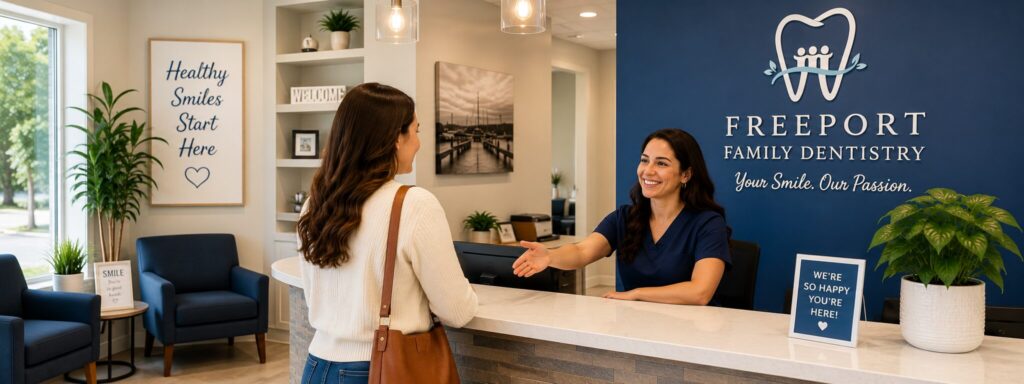
What Happens Before Your Dental Exam?
If you’re a New Patient Dental Exam Freeport, your first visit starts with getting to know you.
Your dental team will ask about:
- Medical history
- Current medications
- Previous dental treatments
- Allergies
- Dental concerns
- Smile goals
- Insurance information
These details help your dentist provide personalized care while considering your overall health.
You’ll also have an opportunity to ask questions about any discomfort, sensitivity, cosmetic concerns, or previous dental experiences.
At Freeport Family Dentistry, we want every patient to feel comfortable before treatment even begins.
Step 1: Comprehensive Oral Examination
After reviewing your medical history, your dentist performs a complete visual examination of your mouth.
This isn’t just about checking for cavities.
A comprehensive exam evaluates every aspect of your oral health.
Your dentist will carefully examine:
Teeth
Checking for:
- Cavities
- Cracks
- Chips
- Worn enamel
- Existing fillings
- Crowns
- Signs of grinding
Gums
Healthy gums are just as important as healthy teeth.
Your dentist looks for:
- Redness
- Swelling
- Bleeding
- Gum recession
- Early periodontal disease
Bite Alignment
Improper bite alignment can contribute to:
- Jaw discomfort
- Tooth wear
- Headaches
- TMJ issues
Your dentist evaluates how your upper and lower teeth fit together.
Soft Tissues
Your lips, cheeks, tongue, and roof of the mouth are also examined for any unusual changes.
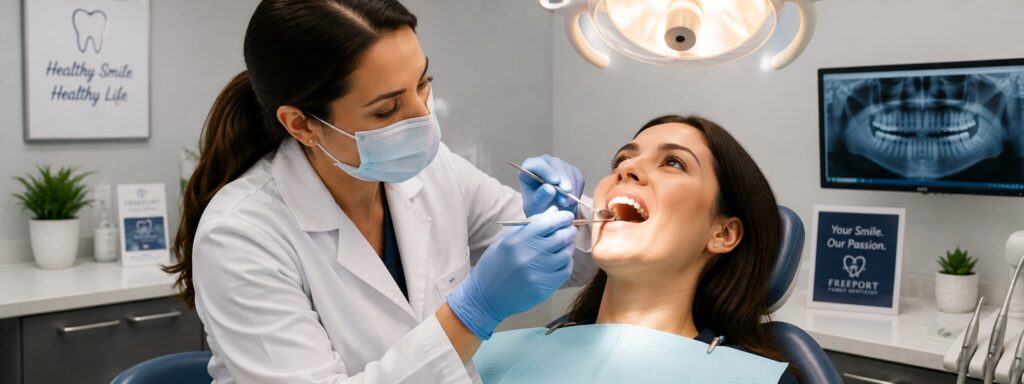
Step 2: Digital Dental X-Rays
One of the most valuable parts of today’s dental visit is taking Digital Dental X-Rays Freeport.
Many dental problems happen beneath the surface where they can’t be seen during a visual exam.
Digital X-rays allow your dentist to safely examine:
- Tooth roots
- Bone levels
- Hidden cavities
- Impacted teeth
- Developing infections
- Wisdom teeth
- Bone loss
- Existing restorations
Without X-rays, many issues would remain hidden until they become painful.
Fortunately, today’s digital imaging technology makes the process quick, comfortable, and safe.
Are Digital Dental X-Rays Safe?
This is one of the most common questions patients ask.
The answer is yes.
Modern digital X-rays use significantly less radiation than traditional film X-rays.
In fact, digital imaging reduces radiation exposure by up to 80–90% compared with older technology.
Additional safety measures include:
- Lead protective apron
- Thyroid collar when appropriate
- Digital sensors requiring fewer exposures
- Images available instantly
Because digital X-rays are more accurate, they also help reduce unnecessary repeat imaging.
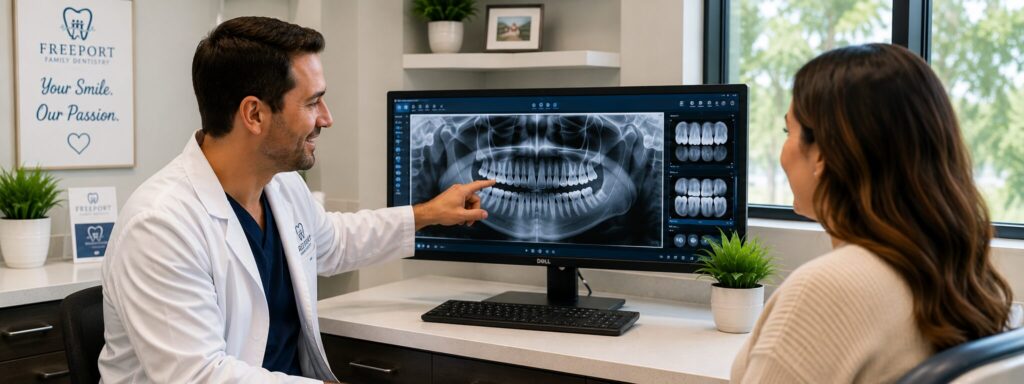
What Can Digital X-Rays Detect?
Digital imaging provides information that simply cannot be seen during a routine visual examination.
Common findings include:
Hidden Cavities
Decay often begins between teeth.
These areas are impossible to inspect visually.
Digital X-rays detect them early.
Bone Loss
Bone loss caused by gum disease develops gradually.
X-rays help monitor changes over time before teeth become loose.
Tooth Infections
An infection at the root of a tooth may not always cause immediate symptoms.
Digital imaging allows dentists to identify these infections before they spread.
Impacted Teeth
Wisdom teeth and other impacted teeth can create problems beneath the gums.
X-rays show their exact position.
Existing Dental Work
Crowns, bridges, fillings, and implants are also evaluated to ensure they remain healthy and functional.
Step 3: Checking for Gum Disease
Your gums are the foundation of your smile.
Even healthy-looking teeth cannot remain strong if gum disease develops.
During your exam, your dentist or hygienist measures the small spaces between your teeth and gums using a periodontal probe.
Healthy pockets generally measure between 1–3 millimeters.
Deeper pockets may indicate early gum disease that requires treatment.
Your provider also checks for:
- Bleeding
- Swelling
- Plaque buildup
- Tartar accumulation
- Gum recession
Early detection is essential because gum disease is much easier to manage before permanent damage occurs.
Step 4: Oral Cancer Screening
Every comprehensive dental exam at Freeport Family Dentistry includes an important health screening that many patients don’t realize they’re receiving.
Your dentist carefully examines the:
- Tongue
- Lips
- Inside of the cheeks
- Roof of the mouth
- Floor of the mouth
- Neck
- Jaw area
This quick, painless examination looks for any unusual sores, lumps, discoloration, or tissue changes that may require further evaluation.
Early detection dramatically improves treatment outcomes, making oral cancer screening a valuable part of every preventive dental visit.
Why Preventive Dentistry Saves You Time and Money
Many patients postpone dental visits because nothing hurts.
Unfortunately, dental problems rarely improve on their own.
A small cavity today can become a root canal tomorrow.
Mild gingivitis can progress into advanced periodontal disease.
Regular exams and digital X-rays allow your dentist to detect these issues early—often before you notice any symptoms.
Preventive care is almost always simpler, more comfortable, and less expensive than treating advanced dental problems.
📞 Book Your Appointment Today
Your smile deserves proactive care—not emergency treatment.
Whether you’re due for your six-month checkup or scheduling your New Patient Dental Exam Freeport, our friendly team is here to help you feel comfortable every step of the way.
📞 Call us today: (979) 233-6000
🌐 Schedule your visit online at: freeportfamilydentistry.com
Step 5: Professional Dental Cleaning
Although the dental examination and cleaning are two different services, they are often completed during the same appointment.
After your dentist completes the examination, a registered dental hygienist performs a thorough professional cleaning to remove plaque and tartar that cannot be eliminated with brushing and flossing alone.
A typical dental cleaning includes:
Plaque & Tartar Removal
Even with excellent home care, plaque can harden into tartar (calculus), especially around the gumline. Professional instruments safely remove these deposits to help prevent cavities and gum disease.
Polishing Your Teeth
Once your teeth are clean, they are polished using a professional polishing paste that helps remove minor surface stains caused by coffee, tea, or other foods and beverages.
Flossing
Your hygienist carefully flosses between every tooth to remove any remaining debris and ensure your gums are healthy.
Fluoride Treatment (When Recommended)
Depending on your oral health and cavity risk, your dentist may recommend a fluoride treatment to strengthen enamel and provide additional protection against tooth decay.
Step 6: Reviewing Your Results
Once your examination and X-rays are complete, your dentist will review everything with you.
Rather than simply telling you what needs to be done, they will explain:
- Current oral health status
- X-ray findings
- Any cavities or concerns
- Gum health
- Existing dental work
- Preventive recommendations
- Treatment options (if necessary)
At Freeport Family Dentistry, patient education is an important part of every visit. We believe you should understand your oral health so you can make informed decisions about your treatment.
If no treatment is needed, your next routine preventive visit will typically be scheduled for six months later
How Often Should You Have Dental Exams and X-Rays?
For most patients, dentists recommend:
Dental Exams
✔ Every 6 months
Professional Cleanings
✔ Every 6 months
Bitewing X-Rays
Usually every 12–24 months, depending on your dental history and risk of cavities.
Full Mouth X-Rays
Typically every 3–5 years or when clinically necessary.
Patients with gum disease, frequent cavities, dental implants, orthodontic treatment, or certain medical conditions may require more frequent monitoring.
Your dentist will recommend an examination schedule that’s appropriate for your individual needs.
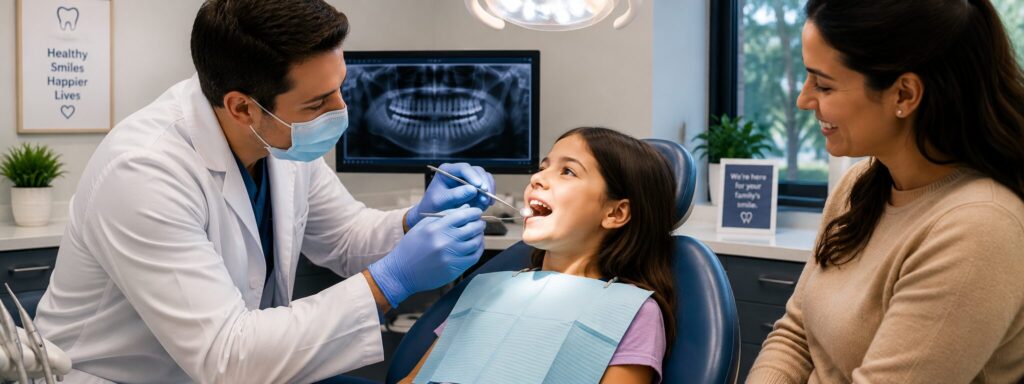
What Happens During a Child’s Dental Exam?
Children follow many of the same examination steps as adults, but the focus is also on healthy development.
Your child’s appointment may include:
- Counting teeth
- Monitoring jaw growth
- Checking bite development
- Looking for cavities
- Evaluating brushing habits
- Assessing fluoride needs
- Monitoring permanent teeth eruption
Early dental visits help children become comfortable in the dental office and encourage healthy habits that last a lifetime.
Common Reasons Patients Delay Dental Exams
Many people postpone dental appointments because they believe:
❌ “My teeth don’t hurt.”
❌ “I’m too busy.”
❌ “I’ll wait until something feels wrong.”
Unfortunately, many dental conditions progress silently.
By the time pain develops, treatment is often more extensive.
Routine dental exams are designed to prevent these situations by identifying issues before they become emergencies.
Tips to Prepare for Your Appointment
Before your visit:
✔ Bring your insurance information (if applicable)
✔ Arrive 10–15 minutes early
✔ Update your medical history
✔ List any medications you’re taking
✔ Write down any questions or concerns
✔ Mention any sensitivity, discomfort, or cosmetic goals
The more information you share, the better your dental team can personalize your care.
Why Choose Freeport Family Dentistry?
When choosing a dentist, you’re trusting someone with your long-term oral health.
At Freeport Family Dentistry, we’re committed to providing exceptional care in a welcoming, family-friendly environment.
Patients choose us because we offer:
🦷 Comprehensive dental exams
🦷 Advanced digital X-rays
🦷 Comfortable, modern technology
🦷 Personalized treatment plans
🦷 Friendly, compassionate team
🦷 Family-focused dental care
🦷 Convenient Freeport location
Whether you’re visiting for preventive care or addressing a specific concern, our goal is to help you achieve a healthy, confident smile.
Frequently Asked Questions
Does getting dental X-rays hurt?
No. Digital dental X-rays are quick, comfortable, and completely painless. The sensor is placed inside your mouth for only a few seconds while the images are taken.
Are digital dental X-rays safe?
Yes. Digital X-rays use significantly less radiation than traditional film X-rays and are considered very safe for both adults and children when used appropriately.
How long does a dental exam take?
Most routine dental exams and cleanings take approximately 45–60 minutes, depending on your oral health and whether X-rays are needed.
Do I need X-rays at every visit?
Not usually. Your dentist will recommend X-rays based on your oral health, age, dental history, and risk factors.
Can cavities be found without X-rays?
Some cavities are visible during an examination, but many develop between teeth or beneath existing fillings and can only be detected using digital X-rays.
What if my dentist finds a cavity?
If a cavity is detected early, treatment is often simple and may only require a small filling. Early diagnosis helps prevent larger, more costly procedures later.
FREEPORT FAMILY DENTISTRY
Schedule Your Dental Exam Today
Looking for a trusted provider for your Dental Exam & Digital X-Rays in Freeport, TX?
Our caring team provides comprehensive dental exams, advanced digital X-rays, and personalized treatment plans using modern technology—all in a comfortable, family-friendly environment.
📞 Call (979) 233-6000
📅 Book Appointment
Visit Our Office
📍 Address 313 S Brazosport Blvd Freeport, TX 77541