
A toothache can make everyday activities uncomfortable. Whether you’re eating breakfast, drinking something cold, or trying to sleep, dental pain can interrupt your routine and leave you wondering what to do next.
For residents of Freeport, TX, and surrounding communities, understanding how to respond to a toothache can help prevent unnecessary delays in receiving appropriate dental care.
Tooth pain can develop for several reasons, including tooth decay, gum inflammation, dental infections, cracked teeth, or damaged restorations. Sometimes the discomfort is mild and temporary. In other cases, it may indicate a dental problem that requires prompt professional attention.
If you’re experiencing persistent or worsening tooth pain, contacting an emergency dentist in Freeport, TX, can help you understand your options and determine whether an urgent appointment is appropriate.
At Freeport Family Dentistry, we understand that dental discomfort can be stressful. Our team provides dental evaluations and treatment recommendations based on each patient’s symptoms and oral health needs.
This guide explains what to do when a toothache develops, which symptoms may require urgent attention, what information to share with your dentist, and why professional evaluation is important.
Quick Answer: What Should You Do When You Have a Toothache?
If you have a toothache, gently rinse your mouth with warm water, carefully floss around the affected tooth to remove trapped food, and avoid chewing on the painful side. A cold compress may help with swelling or discomfort. Contact a dentist if the pain persists, worsens, or is accompanied by swelling or other symptoms.
Severe swelling that affects breathing or swallowing requires immediate emergency medical care.
A dentist can examine the affected area, identify possible causes, and recommend appropriate treatment.
Key Takeaway
Toothaches may result from cavities, dental infections, cracked teeth, gum problems, or damaged restorations.
- Persistent or worsening tooth pain should be evaluated by a dentist.
- Gentle rinsing, careful flossing, and cold compresses may provide temporary comfort.
- Facial swelling, fever, or severe pain may indicate a problem requiring prompt dental attention.
- Difficulty breathing or swallowing, or rapidly spreading swelling, requires emergency medical care.
- Dental X-rays and examinations may be necessary to determine the cause of pain.
- Home remedies cannot reliably diagnose or resolve underlying dental problems.
- An emergency dental evaluation can help determine which treatment is appropriate.
1. Why Does a Toothache Happen?
Tooth pain is a symptom rather than a diagnosis.
Several dental conditions can produce similar discomfort, making it difficult to identify the exact cause without an examination.
Understanding the possible causes can help you recognize why professional dental care may be necessary.
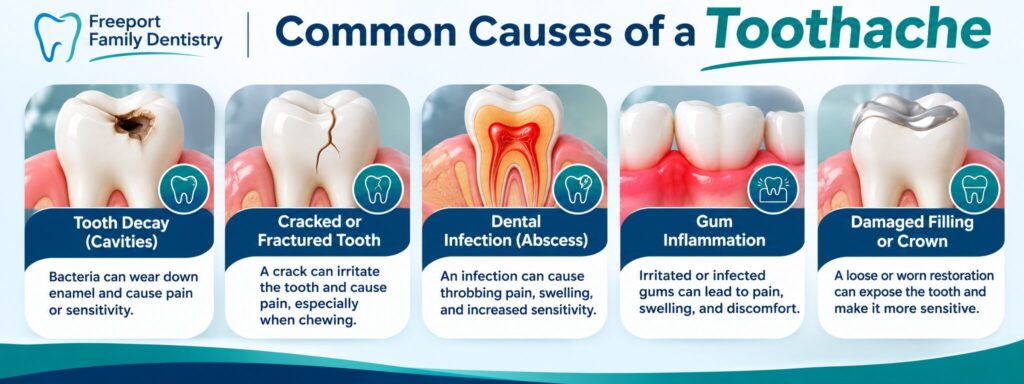
Tooth Decay and Cavities
Tooth decay develops when acids produced by bacteria contribute to the breakdown of tooth enamel.
As decay progresses, it may reach deeper layers of the tooth, potentially causing sensitivity or pain.
Common symptoms include:
- Discomfort when eating sweet foods.
- Sensitivity to hot or cold beverages.
- Pain when biting or chewing.
- A visible hole or dark area on a tooth.
- Persistent aching in the affected area.
Not every cavity causes noticeable pain, particularly during its early stages.
A dentist can evaluate the extent of decay and determine whether a filling or another treatment is appropriate.
Cracked or Fractured Teeth
A tooth may crack because of an injury, biting something hard, or repeated pressure from grinding or clenching.
Some cracks are difficult to see without a professional examination.
Possible symptoms include:
- Sharp pain when biting.
- Discomfort when releasing biting pressure.
- Sensitivity to temperature changes.
- Pain that comes and goes.
Treatment depends on the location and severity of the crack.
Some teeth may be restored with a dental crown, while more extensive damage may require other treatment.
Dental Infections and Abscesses
A dental abscess is a collection of pus associated with a bacterial infection.
It may develop near the root of a tooth or in the surrounding gum tissue.
Possible warning signs include:
- Persistent or throbbing tooth pain.
- Swelling around the gums or face.
- Pain when chewing.
- A bad taste in the mouth.
- Fever.
- Tenderness around the affected tooth.
Dental infections require professional evaluation.
An untreated dental infection can spread beyond the affected tooth and surrounding tissues.
If swelling is rapidly worsening or interferes with breathing or swallowing, seek emergency medical attention immediately.
Gum Inflammation or Periodontal Problems
Inflamed gums can sometimes cause discomfort that patients mistake for tooth pain.
Gum-related symptoms may include:
- Redness or swelling.
- Bleeding during brushing or flossing.
- Tenderness around the teeth.
- Persistent bad breath.
- Discomfort when chewing.
A dental examination can help determine whether the discomfort originates from the gums, teeth, or another structure.
Damaged Fillings or Crowns
Existing dental restorations can occasionally become loose, damaged, or worn.
When this happens, the underlying tooth may become sensitive.
Patients may notice discomfort when eating or drinking or when pressure is applied to the affected tooth.
A dentist can assess whether the restoration needs repair or replacement.
2. What Should You Do Immediately When a Toothache Starts?
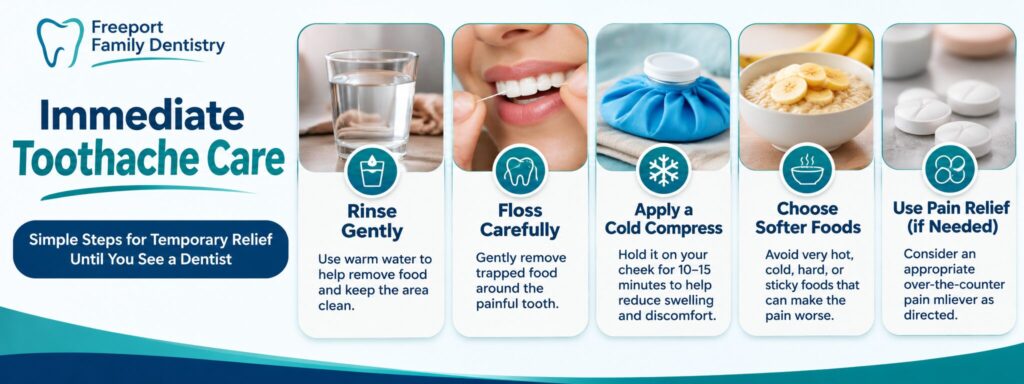
When tooth pain begins, several simple steps may help reduce discomfort while you arrange a dental evaluation.
These measures are temporary and should not replace professional treatment when symptoms persist.
Step 1: Rinse Your Mouth Gently
Rinse your mouth with warm water to help remove loose food particles.
Avoid extremely hot or cold water if your tooth is sensitive.
A gentle rinse may improve comfort, but it will not treat tooth decay or an infection.
Step 2: Carefully Floss Around the Tooth
Food trapped between teeth can sometimes cause pressure or irritation.
Gently floss around the painful area to remove any trapped debris.
Avoid forcing floss into swollen or sensitive gum tissue.
Do not use sharp objects to remove food.
Step 3: Apply a Cold Compress if Needed
If your cheek is swollen or the area is uncomfortable, a cold compress may help.
Wrap a cold pack in a clean cloth and apply it to the outside of your cheek for approximately 10–15 minutes at a time.
Take breaks between applications.
Do not place ice directly against your skin or tooth.
Step 4: Avoid Foods That Trigger Pain
Certain foods and drinks may increase sensitivity.
Until you can speak with a dentist, consider avoiding:
- Very hot beverages.
- Ice-cold drinks.
- Hard or crunchy foods.
- Sticky foods.
- Foods that require chewing on the painful side.
Choose softer foods when eating is uncomfortable.
Step 5: Consider Appropriate Over-the-Counter Pain Relief
Some over-the-counter pain medications may temporarily reduce dental discomfort.
Follow the product instructions and consider your medical history, medications, allergies, and any advice from your healthcare professional.
Not every pain medication is suitable for every patient.
Do not exceed recommended doses.
Never place aspirin or another pain-relieving tablet directly against your gums or tooth, as this can damage oral tissues.
Step 6: Contact a Dentist
If the toothache persists, worsens, or repeatedly returns, contact your dental office.
Explain your symptoms and ask whether an urgent evaluation is recommended.
For patients looking for a toothache dentist in Freeport, TX, Freeport Family Dentistry can help assess dental concerns and discuss appropriate appointment options.
3. When Is a Toothache Considered a Dental Emergency?
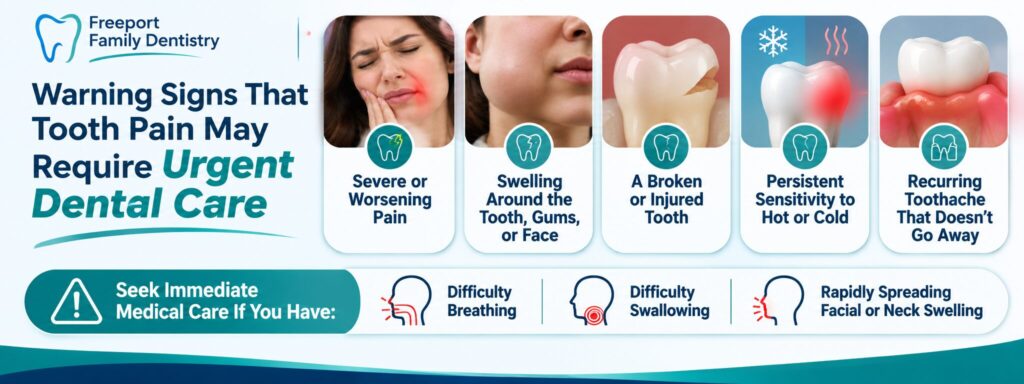
Not every toothache requires the same level of urgency.
However, certain symptoms suggest that delaying evaluation could increase the risk of complications.
Symptoms That Require Prompt Dental Attention
Contact a dentist promptly if you experience:
Severe or worsening pain
Pain that becomes increasingly intense or interferes with eating, sleeping, or normal activities deserves prompt attention.
Swelling around the tooth or gums
Swelling may indicate inflammation, infection, or another dental problem.
Pain following a dental injury
A fall, sports injury, or accident can damage a tooth even when no obvious fracture is visible.
A broken tooth with significant discomfort
A fractured tooth may expose sensitive internal structures or make chewing painful.
Persistent sensitivity
Sensitivity that lasts after exposure to hot or cold temperatures may require evaluation.
A recurring toothache
Pain that disappears and returns does not necessarily mean the underlying problem has resolved.
When Should You Seek Emergency Medical Care?
Some symptoms extend beyond a routine dental emergency.
Seek immediate emergency medical care if you experience:
- Difficulty breathing.
- Difficulty swallowing.
- Rapidly spreading facial or neck swelling.
- Significant swelling involving the mouth, throat, or neck.
- Severe illness associated with suspected dental infection.
These symptoms can indicate a serious condition requiring urgent medical assessment.
Do not wait for a dental appointment if breathing or swallowing becomes difficult.
4. Can a Toothache Go Away on Its Own?
Sometimes dental discomfort improves temporarily.
For example, mild irritation caused by trapped food may resolve after the area is cleaned.
However, pain caused by tooth decay, an infection, or structural damage may return or worsen without treatment.
A particularly important point is that the disappearance of tooth pain does not always mean the tooth is healthy.
In some situations, changes within the tooth’s nerve tissue may reduce pain even though the underlying problem remains.
This is one reason self-diagnosis is unreliable.
If you have experienced persistent, recurring, or unexplained tooth pain, scheduling a dental examination is generally more appropriate than waiting for the problem to become severe.
5. Why Is Self-Diagnosing a Toothache Unreliable?
It can be tempting to search online for symptoms and decide whether you have a cavity, infection, or cracked tooth.
Although educational information can help you understand possible causes, it cannot replace a clinical diagnosis.
Different Dental Problems Can Cause Similar Symptoms
For example, pain when biting may occur with:
- A cracked tooth.
- Tooth decay.
- A damaged filling.
- Inflammation around a tooth.
- Certain dental infections.
The symptom alone does not identify the condition.
Pain May Be Felt Away From Its Source
Sometimes discomfort appears to come from a different tooth or area of the mouth.
This is known as referred pain.
Problems involving the jaw, sinuses, or nearby structures can also produce symptoms that resemble tooth pain.
Some Dental Problems Are Not Visible
A tooth may appear normal even when decay or damage exists between teeth or beneath an existing restoration.
A dentist may need diagnostic imaging or other tests to understand the problem.
Temporary Pain Relief Does Not Treat the Cause
Pain medication, rinses, and cold compresses may improve comfort.
However, they cannot repair a cavity, restore a fractured tooth, or eliminate the source of every dental infection.
A professional examination helps determine whether treatment is necessary and which options may be appropriate.
6. What Information Should You Share With Your Dentist?
When contacting an emergency dentist, providing clear information can help the dental team understand your concerns and assess how urgently you may need an appointment.
You do not need to know what is causing the pain.
Instead, focus on describing what you are experiencing.
When Did the Pain Start?
Tell the dental team whether the discomfort began:
- Today.
- Several days ago.
- After eating.
- Following an injury.
- After a recent dental procedure.
- Gradually over several weeks.
The timing may help your dentist understand the symptoms.
Where Is the Pain Located?
Explain whether the pain seems to involve:
- An upper tooth.
- A lower tooth.
- A front tooth.
- A back tooth.
- The gums.
- One side of the jaw.
If you cannot identify the exact tooth, that is normal.
How Would You Describe the Pain?
Common descriptions include:
- Sharp.
- Dull.
- Throbbing.
- Constant.
- Intermittent.
- Sensitive to pressure.
- Triggered by hot or cold foods.
Describe the symptoms in your own words.
What Makes the Pain Better or Worse?
Mention whether discomfort increases when:
- Chewing.
- Drinking cold water.
- Eating hot food.
- Lying down.
- Touching the affected area.
Also explain whether anything has temporarily helped.
Are There Other Symptoms?
Tell your dentist about:
- Facial or gum swelling.
- Fever.
- Bleeding.
- A bad taste.
- A broken tooth.
- Difficulty opening your mouth.
- Recent dental trauma.
These details can be important when assessing urgency.
Have You Taken Any Medication?
Let the dental team know about medications you have taken for the pain and any relevant medical conditions, allergies, or current prescriptions.
This information can help your dentist make safer treatment recommendations.
7. What Happens During an Emergency Dental Appointment?
If you visit Freeport Family Dentistry because of tooth pain, the first step is understanding your symptoms and examining the affected area.
The exact evaluation depends on your condition.
Step 1: Review of Symptoms and Medical History
Your dentist may ask about:
- When the pain started.
- Whether symptoms have changed.
- Your medical history.
- Current medications.
- Previous dental treatment.
- Any recent injuries.
This information provides context for the examination.
Step 2: Examination of the Teeth and Gums
The dentist may examine the affected tooth, surrounding teeth, gums, and nearby oral structures.
They may look for:
- Visible decay.
- Cracks.
- Damaged restorations.
- Swelling.
- Gum inflammation.
- Signs of trauma.
Step 3: Diagnostic Testing
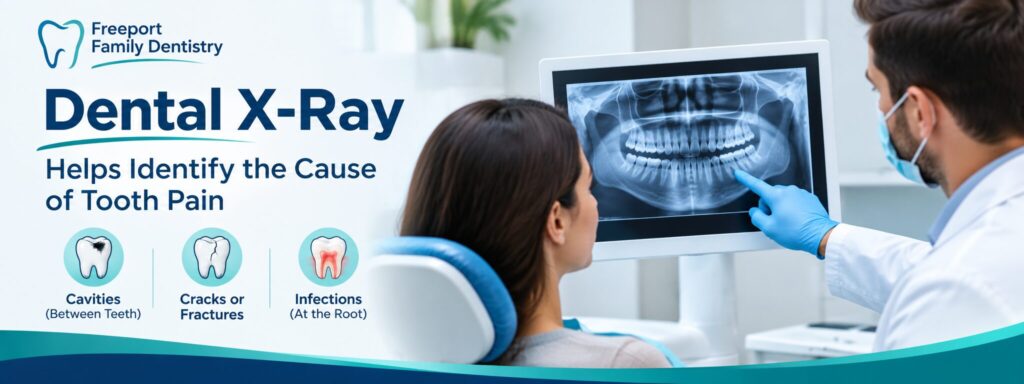
Depending on your symptoms, the dentist may recommend dental X-rays or other diagnostic tests.
These can help evaluate areas that are difficult to assess through a visual examination alone.
Not every patient requires the same tests.
Step 4: Explanation of Findings
After the evaluation, the dentist can explain what the findings suggest and discuss appropriate treatment options.
The recommended approach depends on the diagnosis, the condition of the tooth, and your individual needs.
Step 5: Treatment Planning
Some dental problems can be addressed with restorative treatment.
Others may require more extensive care or referral to a dental specialist.
The goal is to identify the problem and determine an appropriate course of treatment.
8. What Dental Treatments May Be Recommended for Tooth Pain?
Treatment for a toothache depends on the underlying cause.
There is no single procedure that works for every type of dental pain.
Dental Fillings
If a cavity is responsible for the discomfort and the tooth can be restored with a filling, the dentist may recommend removing the decayed material and placing a restoration.
The suitability of a filling depends on the extent of damage.
Dental Crowns
A dental crown may be recommended when a tooth has substantial structural damage but can still be restored.
Crowns cover and protect the visible portion of a tooth.
They may be considered for certain cracked or weakened teeth.
Root Canal Treatment
When the tissue inside a tooth becomes inflamed or infected, root canal treatment may be considered if the tooth can be saved.
This procedure involves treating the affected internal tissues and sealing the tooth.
Your dentist will determine whether this treatment is appropriate or whether specialist care is needed.
Tooth Extraction
In some situations, a tooth may be too severely damaged to restore predictably.
Extraction may then be discussed as a treatment option.
A dentist should evaluate the tooth before determining whether removal is necessary.
Gum Treatment
If discomfort is related to periodontal inflammation or disease, treatment may focus on the affected gum tissues.
The recommended approach depends on the diagnosis and severity of the condition.
Treatment for Dental Infections
Dental infections may require drainage, root canal treatment, extraction, or another procedure to address the source.
Antibiotics are not necessary for every toothache and do not replace definitive dental treatment when it is required.
A dentist can determine whether medication or another intervention is appropriate.
9. Toothache vs. Tooth Sensitivity: What’s the Difference?
Toothaches and tooth sensitivity can sometimes feel similar.
However, understanding the pattern of discomfort may help you describe your symptoms more accurately.
| Feature | Tooth Sensitivity | Toothache |
|---|---|---|
| Common sensation | Brief, sharp discomfort | Aching, sharp, throbbing, or persistent pain |
| Typical triggers | Cold, heat, sweet foods, or brushing | May occur with chewing, temperature changes, or without an obvious trigger |
| Duration | Often brief | May be brief, recurring, or continuous |
| Possible causes | Exposed dentin, enamel wear, gum recession, or decay | Decay, infection, cracks, damaged restorations, or gum problems |
| Recommended action | Dental evaluation if persistent or worsening | Dental evaluation for persistent, severe, or unexplained pain |
These differences are general patterns, not diagnostic rules.
Some serious dental conditions initially cause sensitivity rather than constant pain.
A dentist can determine whether symptoms are related to exposed dentin, tooth decay, or another condition.
10. Can You Prevent Toothaches?
Not every dental emergency can be prevented.
Accidents and unexpected dental injuries can happen even when you maintain good oral hygiene.
However, preventive dental habits can help reduce the risk of several common causes of tooth pain.
Brush Twice Daily
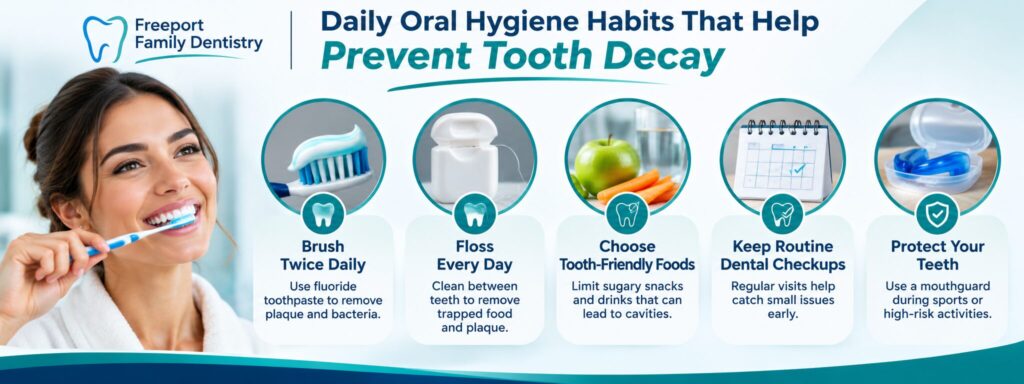
Brush your teeth twice a day using fluoride toothpaste.
Use a soft-bristled toothbrush and gentle pressure.
Clean Between Your Teeth
Floss or use another appropriate interdental cleaning method daily.
Cleaning between teeth helps remove plaque and food debris from areas that toothbrush bristles may not reach effectively.
Limit Frequent Sugar Exposure
Frequently consuming sugary foods and beverages can increase the risk of tooth decay.
Try to limit frequent snacking on sugary items and maintain regular oral hygiene.
Schedule Routine Dental Visits
Routine dental examinations allow dentists to evaluate oral health and identify potential concerns.
The recommended frequency of visits varies according to individual risk factors and dental needs.
Protect Your Teeth During Sports
If you participate in activities with a risk of dental injury, consider using an appropriate mouthguard.
Avoid Using Teeth as Tools
Do not use your teeth to open packages, tear objects, or crack hard items.
These habits can increase the risk of tooth damage.
Address Dental Problems Early
If you notice a damaged filling, persistent sensitivity, or a change in your bite, contact your dentist.
Early evaluation may allow more treatment options before a problem becomes more complicated.
11. Finding an Emergency Dentist in Freeport, TX
When dental pain develops, choosing a dental office that can evaluate your symptoms is an important step.
For patients searching online for an emergency dentist in Freeport, TX, consider whether the practice offers emergency dental evaluations and how patients can request appointments.
What Should You Look for in an Emergency Dental Office?
Dental examination and diagnostic capabilities
An appropriate examination helps determine what may be causing the discomfort.
Clear communication
The dental team should explain its findings, available treatment options, and any recommended next steps.
Some toothaches are associated with damaged teeth or restorations that may require treatment.
Patient-focused treatment planning
Recommendations should reflect the patient’s diagnosis, oral health needs, and preferences.
Clear appointment information
Contact the office to ask about available appointments and how urgent concerns are handled.
Dental Care for Freeport and Surrounding Communities
Freeport Family Dentistry serves patients seeking dental care in Freeport, Texas.
Patients from nearby communities, including Lake Jackson, Clute, and surrounding Brazoria County areas, may also be looking for professional evaluation when tooth pain occurs.
If you are experiencing a persistent toothache, contacting a dental office can help you determine the next appropriate step.
12. Why Choose Freeport Family Dentistry for Toothache Evaluation?
When you’re experiencing dental pain, understanding the cause is an important part of deciding what to do next.
At Freeport Family Dentistry, our approach emphasizes professional dental evaluation, clear communication, and treatment recommendations based on individual needs.
Emergency Dental Evaluations
Dental pain can occur unexpectedly.
Our emergency dental services help patients seek evaluation for concerns such as toothaches, damaged teeth, and other urgent dental problems.
General Dentistry
Routine dental care supports long-term oral health and can help identify problems before they become more serious.
Restorative Dentistry
When teeth are damaged by decay or injury, restorative treatments may help address certain dental concerns.
The appropriate treatment depends on the condition of the affected tooth.
Individualized Recommendations
Because tooth pain can have multiple causes, treatment decisions should follow a dental examination rather than assumptions based on symptoms alone.
If you’re looking for a toothache dentist in Freeport, TX, contact Freeport Family Dentistry to discuss your symptoms and available appointment options.
13. Frequently Asked Questions About Toothaches in Freeport, TX
1. What should I do if I have a severe toothache in Freeport, TX?
Contact a dentist promptly and describe your symptoms. While waiting for professional advice, gently rinse your mouth, avoid chewing on the affected side, and consider appropriate temporary pain relief. If you have difficulty breathing or swallowing, seek emergency medical care.
2. How do I know if my toothache is an emergency?
Severe or worsening pain, facial swelling, fever, dental trauma, or significant discomfort may require prompt dental evaluation. Difficulty breathing or swallowing and rapidly spreading swelling require immediate emergency medical attention.
3. Can a tooth infection go away without treatment?
A dental infection generally requires professional evaluation and may need a procedure to address its source. Symptoms can sometimes improve temporarily even when the infection remains. Do not assume an infection has resolved because the pain decreases.
4. What is the fastest way to relieve a toothache?
Temporary measures may include gentle rinsing, carefully removing trapped food, applying a cold compress, and using an appropriate over-the-counter pain reliever. The most effective long-term approach depends on identifying and treating the underlying cause.
5. Should I visit a dentist if my toothache comes and goes?
Yes. Recurring tooth pain can indicate a dental problem even when the discomfort is not constant. A dentist can examine the affected area and determine whether treatment is needed.
6. Can a cavity cause severe tooth pain?
Yes. Tooth decay can cause significant discomfort, particularly when it affects deeper tooth structures. However, severe pain can have several causes, so a dental examination is necessary to determine the diagnosis.
7. What should I tell my dentist about a toothache?
Explain when the pain started, where it occurs, how it feels, what makes it worse, and whether you have swelling, fever, or a recent injury. Also mention relevant medical conditions and medications.
8. Will I need a dental X-ray for a toothache?
Possibly. Your dentist may recommend an X-ray if additional information is needed to evaluate the tooth and surrounding structures. The decision depends on your symptoms and examination findings.
9. Can I wait a few days before seeing a dentist?
The appropriate timing depends on your symptoms. Persistent, worsening, or severe pain should be assessed promptly. Swelling, fever, or other concerning symptoms may require more urgent attention. Contact a dental professional for guidance rather than assuming it is safe to wait.
10. Can a cracked tooth cause pain without visible damage?
Yes. Some cracks are difficult to see and may cause discomfort when biting or releasing pressure. A dental examination can help determine whether a crack or another problem is responsible.
11. Do antibiotics cure a toothache?
Not necessarily. Antibiotics are not appropriate for every toothache and cannot repair a cavity or damaged tooth. Dental treatment is often needed to address the underlying cause. A dentist can determine whether antibiotics are indicated.
12. Where can I find a toothache dentist in Freeport, TX?
Freeport Family Dentistry provides dental services in Freeport, TX, including emergency dental care. Contact the practice to explain your symptoms and ask about appointment availability.
14. Don’t Ignore Persistent Tooth Pain
A toothache is your body’s way of signaling that something may need attention.
Although some discomfort may be temporary, persistent or worsening pain can indicate tooth decay, infection, injury, or another dental condition.
Because different problems can produce similar symptoms, relying on online information or home remedies alone may delay appropriate care.
A professional dental examination can help identify the cause of discomfort and determine which treatment options may be suitable.
If you’re experiencing tooth pain in Freeport, TX, contacting a dentist is an important step toward understanding your oral health needs.
Schedule a Dental Evaluation at Freeport Family Dentistry
Experiencing a toothache in Freeport, TX?
Freeport Family Dentistry provides emergency dental services and evaluations for patients experiencing dental concerns.
Whether you have persistent tooth pain, a damaged tooth, or unexplained sensitivity, our team can discuss your symptoms and help you understand the next steps.
Contact Freeport Family Dentistry to ask about an appointment.
Visit: freeportfamilydentistry.com
Medical Disclaimer: This article provides general educational information and is not a substitute for professional dental diagnosis or treatment. Dental symptoms and treatment needs vary. Contact a qualified dental professional for individualized advice. Seek immediate emergency medical care for difficulty breathing or swallowing or rapidly spreading facial or neck swelling.