
A cavity can affect more than the appearance of your tooth. If decay damages the tooth structure, a dental filling may be used to restore the affected area and help the tooth function normally again.
For patients searching for tooth-colored fillings in Freeport, TX, composite resin fillings offer a restoration that can blend with the natural appearance of the tooth. However, the right filling material depends on the individual tooth, the size and location of the cavity, and other clinical considerations.
At Freeport Family Dentistry, fillings are among the dental services available to help address cavities and restore affected teeth.
Quick Answer
Tooth-colored fillings are restorations commonly made from composite resin that can repair certain teeth affected by cavities or minor damage. Because composite material can be matched to the natural color of a tooth, the finished restoration can be less noticeable. Whether a tooth-colored filling is appropriate depends on factors such as the size and location of the cavity, the condition of the tooth, and the forces placed on it. A dental examination can help determine the appropriate treatment.
Key Takeaways
- Tooth-colored fillings are commonly made from composite resin.
- They can restore teeth affected by certain cavities and forms of minor damage.
- Composite fillings can provide a more natural-looking appearance than silver-colored fillings.
- They can be used on both front and back teeth in appropriate situations.
- Not every cavity is best treated with the same filling material.
- The size, location and condition of the tooth influence treatment decisions.
- Good oral hygiene and regular dental visits remain important after a filling.
What Are Tooth-Colored Fillings?

Tooth-colored fillings are dental restorations generally made from resin-based composite material.
Composite resin contains a resin matrix and inorganic filler materials and is designed to provide a tooth-colored restorative option. The American Dental Association classifies resin-based composites among the direct restorative materials used in dentistry.
The most noticeable difference between a composite filling and a traditional silver-colored filling is appearance. Composite material can be selected to closely match the surrounding tooth, making the restoration less noticeable.
This can be particularly appealing when a filling is visible when you smile or speak.
However, appearance is only one consideration. Dentists also consider the size and location of the cavity, chewing forces, the condition of the remaining tooth structure and other individual factors when selecting a restorative material.
Why Might You Need a Cavity Filling?
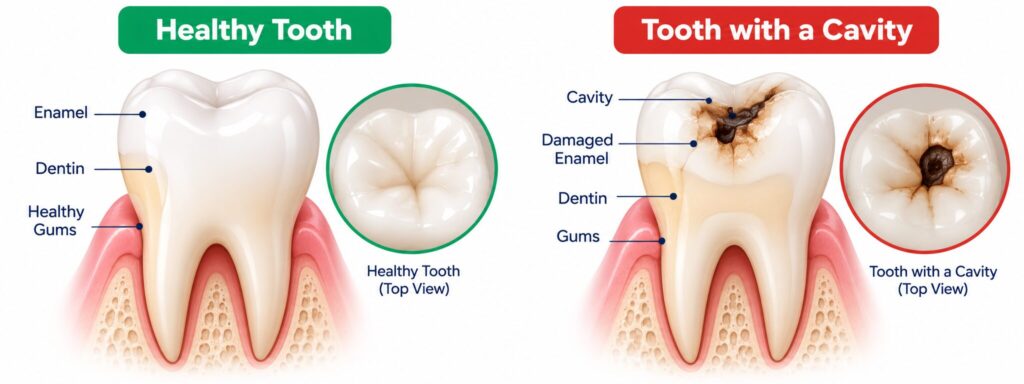
A cavity develops when tooth structure is damaged by the dental caries process.
When a cavity has progressed to the point where restorative treatment is appropriate, a dentist may recommend a filling to restore the affected portion of the tooth.
The purpose of a filling isn’t simply to cover a hole. It is part of a broader tooth restoration process intended to repair damaged tooth structure.
The ADA’s evidence-based clinical practice guideline on restorative treatment addresses how dentists select restorative materials and approaches for caries lesions in both primary and permanent teeth.
Depending on the stage and extent of decay, treatment can vary. Not every early area of tooth decay necessarily requires the same restorative procedure.
That is why a dental examination is important before deciding how a tooth should be treated.
How Do Tooth-Colored Fillings Restore a Tooth?
A composite filling restores the area of a tooth affected by decay or certain types of damage.
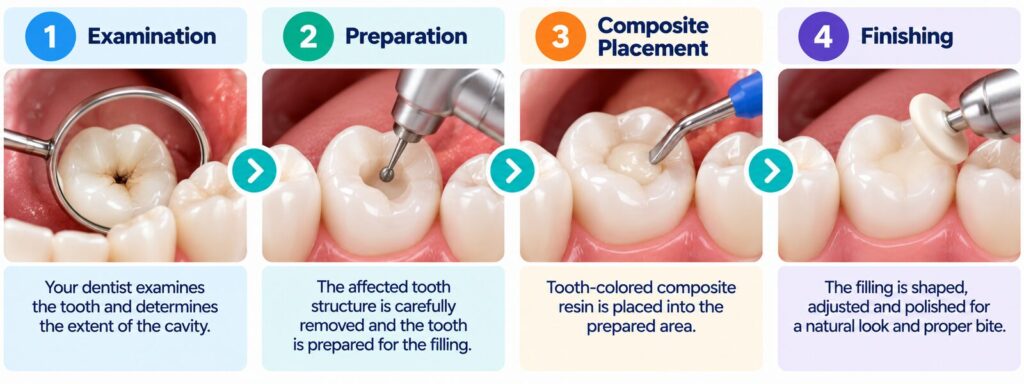
While the exact procedure varies from patient to patient, a typical filling appointment may involve several steps.
1. Examination
Your dentist first evaluates the tooth and the surrounding area.
Depending on your symptoms and the clinical situation, dental X-rays or other diagnostic tools may be used.
2. Tooth Preparation
If a filling is appropriate, the dentist prepares the affected area of the tooth for restoration.
The specific approach depends on the size and location of the cavity.
3. Composite Placement
The tooth-colored composite material is placed into the prepared area.
Composite restorative materials are designed to bond to tooth structure with the help of dental bonding systems.
4. Shaping
The material is shaped to fit the contours of the tooth.
5. Finishing
The restoration is finished and adjusted as needed so that it fits appropriately with your bite.
The exact technique and materials used can vary depending on the tooth and clinical circumstances.
What Are the Benefits of Tooth-Colored Fillings?
A More Natural Appearance
The most obvious benefit of a tooth-colored filling is its appearance.
Composite resin is designed to resemble natural tooth structure, making it less visually noticeable than a silver-colored restoration.
MouthHealthy notes that tooth-colored composite fillings are a good option for people who prefer fillings that look more natural.
They Can Be Used on Front and Back Teeth
Composite fillings can be used on both front and back teeth in appropriate cases.
That doesn’t mean composite is automatically the right material for every tooth. Location, size and chewing forces still matter.
They Provide a Direct Restorative Option
Composite resin is a direct restorative material, meaning it can generally be placed directly into the prepared tooth rather than requiring a separately fabricated laboratory restoration.
They Can Restore More Than Appearance
A filling isn’t only about making a tooth look better.
When appropriate, restorative treatment can rebuild part of a tooth affected by decay and help restore its shape and function.
Are Tooth-Colored Fillings Right for Every Cavity?
No.
The appropriate restorative material depends on the individual situation.
According to MouthHealthy, dentists consider factors including the size and location of the cavity, cosmetic preferences, expected longevity, insurance coverage and out-of-pocket costs when discussing filling materials.
For example, composite fillings can provide good durability and fracture resistance for small- to mid-size restorations exposed to moderate chewing forces. Larger or high-stress restorations may require a different approach.
This is why your dentist may recommend different restorative materials for different teeth.
The goal is to select an option appropriate for the condition and location of the tooth rather than assuming one material is right for everyone.

Tooth-Colored Fillings vs. Silver-Colored Fillings
Patients often ask about the difference between composite and amalgam fillings.
| Feature | Tooth-Colored Composite | Silver-Colored Amalgam |
|---|---|---|
| Appearance | Tooth-colored | Silver/metallic |
| Main material | Resin-based composite | Metal alloy |
| Aesthetic appearance | Blends with natural teeth | More noticeable |
| Common consideration | Appearance and appropriate clinical use | Durability and appropriate clinical use |
| Suitable for every cavity? | No | No |
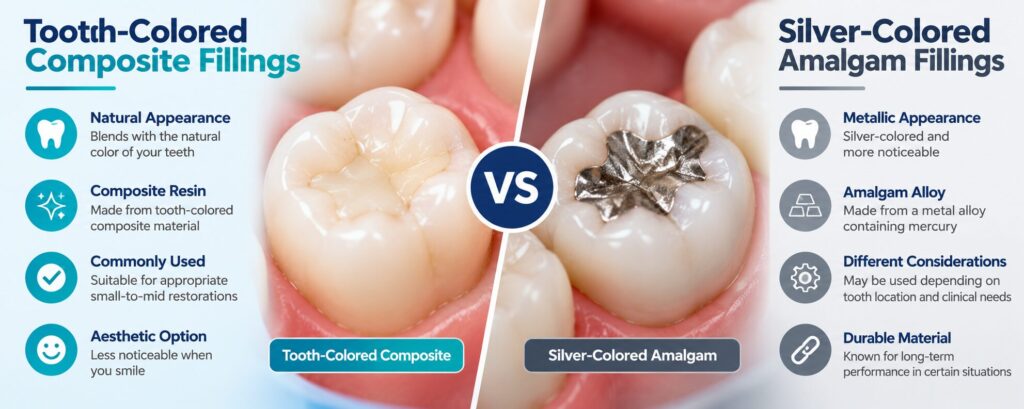
Both materials have different properties and clinical considerations.
The ADA identifies resin composites and amalgam as different direct restorative materials, each with advantages and limitations.
MouthHealthy also emphasizes that dentists consider the individual cavity and patient when selecting filling materials.
So rather than asking which material is universally “best,” it’s more useful to ask:
Which material is appropriate for this particular tooth?
What Happens During a Cavity Filling Appointment?
A filling appointment typically begins with an evaluation.
Your dentist may ask about symptoms such as:
- Tooth sensitivity
- Tooth pain
- Pain while chewing
- Changes in the appearance of a tooth
- Food getting stuck around a tooth
The dentist then examines the tooth and determines whether additional diagnostic information is needed.
If a cavity is identified and restorative treatment is appropriate, your dentist can explain the recommended treatment and available material options.
At Freeport Family Dentistry, fillings are included among the practice’s listed dental services.
The length and details of an appointment can vary depending on the tooth and the extent of treatment required.
Can Tooth-Colored Fillings Repair a Chipped Tooth?
Sometimes.
Composite resin can be used for certain types of minor tooth damage, including some chips, depending on the size and location of the damaged area.
However, not every chipped tooth should be repaired with a simple filling.
A larger fracture or tooth with significant structural damage may require another type of restoration.
An examination allows the dentist to determine how much healthy tooth structure remains and which treatment may be appropriate.
What If a Cavity Is Too Large for a Filling?
A filling isn’t always the right solution for a heavily damaged tooth.
If substantial tooth structure has been lost, a dentist may recommend another type of restoration, such as a dental crown, depending on the individual circumstances.
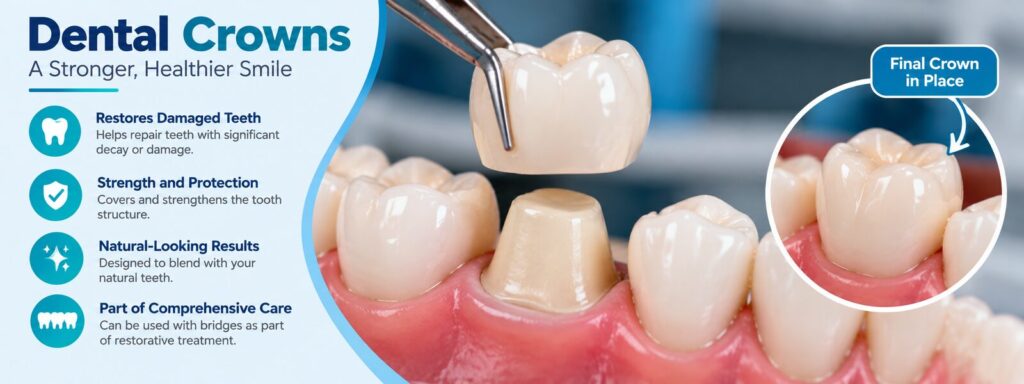
Freeport Family Dentistry lists Dental Crowns and Bridges and Restorative Dentistry among its services.
The important question is not simply whether a tooth has a cavity, but how much of the tooth remains healthy and what type of restoration can appropriately address the damage.
How Does Tooth Restoration Work?
Tooth restoration is a broad term that refers to repairing or replacing damaged tooth structure.
A composite filling is one form of direct restoration.
Other restorative procedures may include:
- Dental crowns
- Bridges
- Other restorative treatments
The appropriate option depends on the condition of the tooth.
Freeport Family Dentistry currently lists restorative dentistry, fillings, crowns and bridges among its services.
If you’re experiencing tooth pain or believe you may have a cavity, a dental evaluation can help determine whether a filling or another restoration may be appropriate.
How Long Do Tooth-Colored Fillings Last?
There isn’t one exact lifespan that applies to every composite filling.
How long a restoration lasts can depend on several factors, including:
- Size of the filling
- Location of the tooth
- Amount of chewing force
- Oral hygiene
- Diet
- Condition of the surrounding tooth
- Existing dental work
- Regular dental care
MouthHealthy emphasizes that no dental filling lasts forever and notes that composite fillings can sometimes be less durable than amalgam and may require replacement more often.
The ADA also notes that composite restorations have demonstrated increasingly long survival and reliability, while their performance depends on the specific clinical situation.
Regular dental examinations can help your dentist monitor existing restorations and identify new problems.
Can a Tooth-Colored Filling Become Discolored?
Composite resin is tooth-colored, but it isn’t completely immune to changes in appearance.
The ADA lists potential staining or discoloration among the disadvantages associated with resin-based composites.
Factors such as the material used, oral environment and habits can affect the appearance of a restoration over time.
If you notice a change in the appearance of an existing filling, mention it during your next dental visit.
Is Sensitivity Normal After a Filling?
Some patients may notice temporary sensitivity after dental treatment.
Sensitivity can have different causes, and the expected experience can vary depending on the tooth and procedure.
If discomfort is severe, persistent, worsening or concerning to you, contact your dental office so the tooth can be evaluated.
It’s important not to assume that ongoing pain automatically means a filling has failed. A dentist can assess the tooth and determine the cause.
How Can You Protect Your Teeth After a Filling?
A filling repairs a tooth, but it doesn’t make the tooth immune to future decay.
Maintaining good oral hygiene remains important.
The ADA’s MouthHealthy recommends:
- Brushing twice a day with fluoride toothpaste
- Flossing daily
- Eating a balanced diet
- Visiting the dentist regularly
These habits can help support your overall oral health and reduce the risk of future dental problems.
Regular dental examinations can also help identify problems before they become more extensive.
What Are the Signs You May Need a Cavity Filling?
A cavity doesn’t always cause noticeable symptoms in its early stages.
Possible signs that a tooth should be evaluated include:
Tooth Sensitivity
You may notice discomfort when consuming hot, cold or sweet foods and drinks.
Tooth Pain
Persistent or recurring pain may indicate a dental problem that needs evaluation.
Visible Changes
You may notice a dark area, hole or other change in the tooth.
Pain While Chewing
Discomfort when biting or chewing can be a reason to schedule an examination.
Food Getting Stuck
Repeatedly getting food trapped around one particular tooth can be worth discussing with your dentist.
These signs don’t necessarily mean you have a cavity. Different dental conditions can cause similar symptoms.
A dental examination is needed to determine the cause.
Tooth-Colored Fillings in Freeport, TX
If you’re searching for tooth-colored fillings in Freeport, Freeport Family Dentistry offers fillings as part of its dental services. The practice is located at:
Freeport Family Dentistry
313 S Brazosport Blvd
Freeport, TX 77541
📞 (979) 233-6000
The practice’s current service information includes fillings, restorative dentistry, crowns and bridges, along with other general and restorative dental services.
If you’re experiencing tooth sensitivity, pain, a visible cavity or another concern about a damaged tooth, an examination can help determine what treatment may be appropriate.
Ready to Restore Your Smile?
Contact Freeport Family Dentistry to schedule an appointment and discuss your dental concern.
📞 (979) 233-6000
📍 313 S Brazosport Blvd, Freeport, TX 77541
Your Smile. Our Passion.
Frequently Asked Questions
What are tooth-colored fillings?
Tooth-colored fillings are dental restorations commonly made from composite resin. They are designed to restore certain teeth affected by cavities or other damage while providing a color that can blend with the natural tooth.
Are tooth-colored fillings the same as composite fillings?
Generally, yes. Tooth-colored fillings are commonly made from resin-based composite materials.
Are tooth-colored fillings better than silver fillings?
Neither material is automatically appropriate for every situation. Dentists consider factors such as cavity size, location, chewing forces, appearance and other patient-specific considerations when selecting a restorative material.
Can tooth-colored fillings be used on back teeth?
Yes, composite fillings can be used on back teeth in appropriate situations. However, the size of the restoration and chewing forces on the tooth are important considerations.
How do I know if I need a cavity filling?
A dental examination is needed to determine whether a filling is appropriate. Symptoms such as tooth sensitivity, pain or visible changes can be reasons to have a tooth evaluated, but they do not by themselves establish a diagnosis.
Can a tooth-colored filling repair a chipped tooth?
It may be appropriate for certain minor chips, depending on the size, location and condition of the tooth. Larger or more complex damage may require another type of restoration.
How long do tooth-colored fillings last?
There is no single lifespan for every composite filling. Longevity varies according to factors such as filling size, tooth location, chewing forces, oral hygiene and the condition of the surrounding tooth.
Do tooth-colored fillings look natural?
Composite fillings are designed to be tooth-colored and can be selected to blend with the surrounding tooth, making them less noticeable than silver-colored restorations.
Can a filling prevent future cavities?
A filling restores an existing area of tooth damage, but it does not prevent future decay by itself. Brushing with fluoride toothpaste, flossing, a balanced diet and regular dental visits remain important for oral health.
What if my cavity is too large for a filling?
If a tooth has extensive structural damage, your dentist may discuss another restorative option, such as a crown, depending on the clinical situation. An examination is necessary to determine the appropriate treatment.
Where can I get a cavity filling in Freeport, TX?
Freeport Family Dentistry provides fillings as part of its dental services and is located at 313 S Brazosport Blvd, Freeport, TX 77541. You can contact the office at (979) 233-6000.
Medical Disclaimer
This article is for general educational purposes only and is not a substitute for an individual dental examination, diagnosis or treatment plan. If you have persistent pain, swelling, trauma or another urgent dental concern, contact a dental professional for appropriate evaluation.